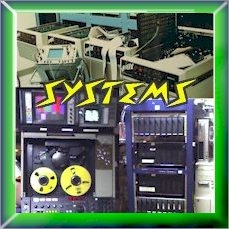
My brother Alan, who works at and follows all things NASA sent me this link which I found particularly of interest since I once owned two Ampex FR-600 data recorders that came from NASA in Huntsville. Having resurrected an ancient (by technology standards) Scanimate analog animation computer I have experienced first-hand the joys of reviving old technology, finding players for outmoded media, documentation, and better yet, people that used and worked with that technology back in the day.
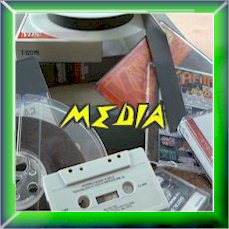
Everybody, including NASA, seems to think recording something is all thats required to archive it. Think again! I have a wall full of media, in dozens of different formats, the players for which are long-dead or dying! And even at that, the media itself is decaying day by day.
A recent posting lamented the challenge of Permabits and Petabytes” and suggested that we only need to remember to archive a player as well.
I posted the following response which I’d like to repeat here:
Archiving a reader sounds simple but the reader is often the tip of the iceberg!
Most readers had a lot of electro-mechanical moving parts that wear out. Tape running past heads acts like very fine grain sandpaper, and there aren’t any spares on a shelf somewhere. Tape itself is iron oxide bound to acetate or mylar and even if it has been carefully kept in a controlled temperature and humidity environment, it takes very little time to degrade. I’ve seen old 2″ quadruplex videotapes that shed oxide so badly that you maybe got one chance to run them through the machine, praying that the heads did not clog, and usually they did.
If its computer data, the problem has to include archiving the computer, operating system, and athe backup application that formatted the data. The state of the art has advanced so quickly that most of the manufacturers of vintage storage drives and their attached computer systems are no longer in business. And the computers and OS themselves rely on aging storage systems just to function.
I was involved in the conversion of some of the old Hollywood movie negatives to digital masters, and the problem remains: What do you store your data on that is guaranteed to be around for a very long time? There is no good answer! In Hollywood they make numerous film prints of the restored imagery, because film is the only medium that is still functional 100 years later.
If you talk to the manufacturers of CD and DVD media, they tell horror stories of how few years it takes for oxygen to penetrate the plastic disc and oxidize the metallic or dye layers with the data on it. Think of the amount of data that has been stored on that media that will no longer be readable in just a few years, whether the reader is archived or not!
The only man-made data that has survived centuries is literally carved in stone!